



















For many people, coffee is more than just a morning drink, it’s a daily ritual that helps them feel alert, focused and ready to start the day. But while coffee can be part of a healthy lifestyle, how you drink it matters. The amount of caffeine, added sugar, cream and even the timing of your coffee can influence its effects on your body. You should consider healthy tips for coffee, usage limit per day and its nutritional facts.
The good news is that moderate coffee consumption can offer several potential health benefits. Research has associated coffee consumption with a lower risk of conditions such as type 2 diabetes, Parkinson’s disease and some liver diseases. Coffee may also support mood and mental alertness.
Let’s look at how to enjoy coffee in a healthier way.
Potential Health Benefits of Coffee
1. Helps Improve Alertness and Focus
Caffeine is a natural stimulant that can help reduce feelings of tiredness and improve alertness. This is one reason many people enjoy coffee before starting work, studying or exercising.
2. May Support Physical Performance
Caffeine can increase alertness and may help you feel less tired during physical activity. For people who exercise regularly, a moderate amount of coffee before a workout may be useful.
3. Contains Antioxidants
Coffee contains naturally occurring compounds, including antioxidants, that contribute to its nutritional profile. These compounds may help protect cells from oxidative stress.
4. May Be Linked With Long-Term Health Benefits
Research suggests that moderate coffee consumption may be associated with a lower risk of type 2 diabetes, Parkinson’s disease, Alzheimer’s disease, certain liver conditions and other health outcomes. However, these associations do not mean that coffee alone prevents these diseases.
5. Can Improve Mood
For some people, caffeinated coffee is associated with improved mood and a lower risk of depression. Again, the effects vary from person to person.
How Much Coffee Is Safe Per Day?
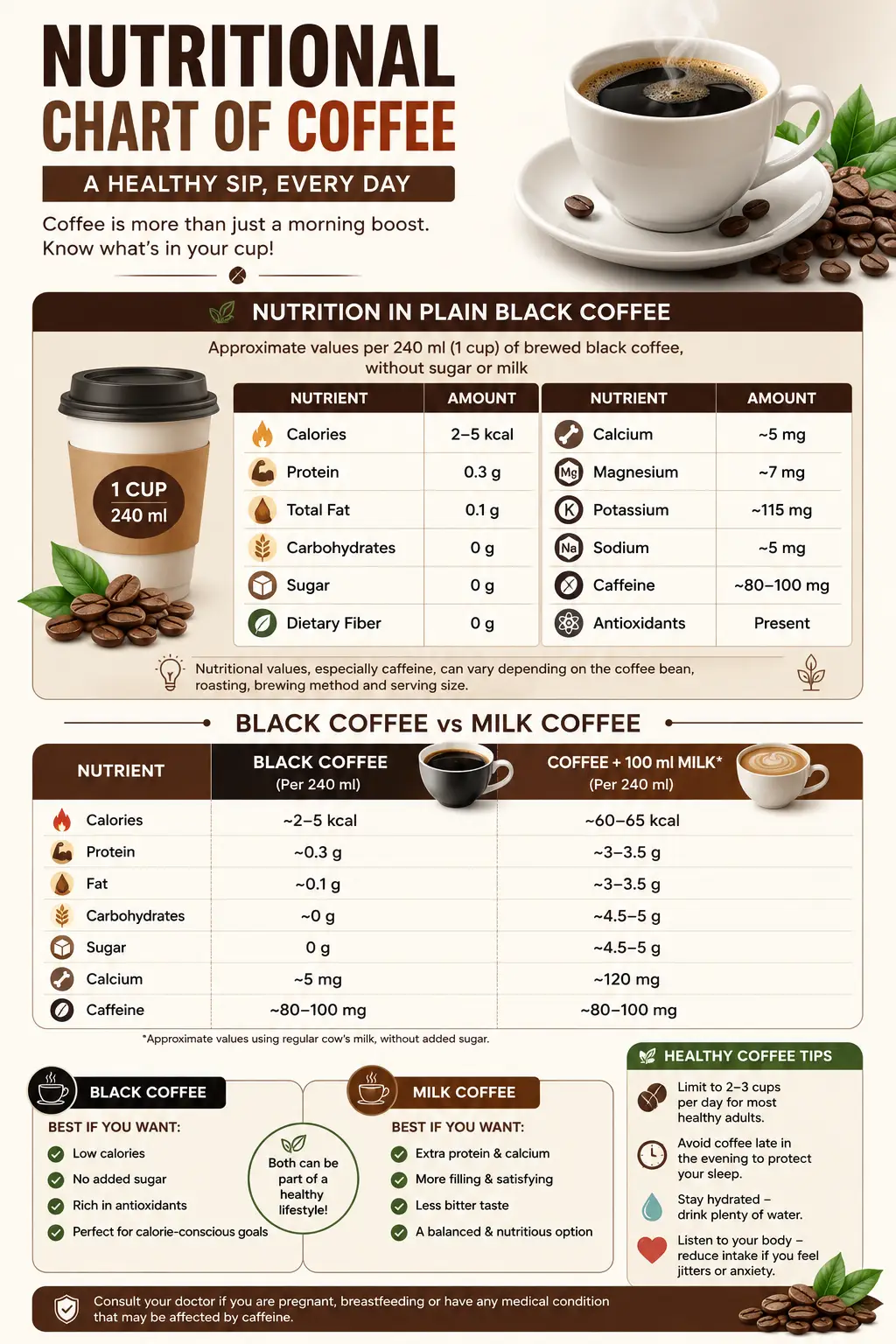
For most healthy adults, the FDA considers up to 400 mg of caffeine per day an amount that is generally not associated with negative effects. However, the actual caffeine content of coffee varies considerably depending on the beans, brewing method, serving size and strength.
As a practical approach, many people can enjoy 2–3 moderate cups of coffee per day, while keeping track of caffeine from other sources such as tea, chocolate, energy drinks and some medications.
Remember: more coffee does not necessarily mean more benefits.
Healthy Coffee Drinking Tips
Choose Less Added Sugar
One of the easiest ways to make coffee healthier is to reduce added sugar. A plain cup of coffee contains very few calories, but large amounts of sugar, flavored syrups and sweetened creamers can turn it into a high-calorie beverage.
Watch Your Portion Size
A large café coffee may contain considerably more caffeine than a small homemade cup. Always consider the size and strength of your drink rather than counting cups alone.
Avoid Coffee Too Close to Bedtime
Caffeine can interfere with sleep, particularly when consumed later in the day. If coffee makes it difficult for you to sleep, consider moving your last cup to the early or mid-afternoon. Some people are more sensitive to caffeine than others.
Stay Hydrated
Coffee contributes to your daily fluid intake, but water should still be your main source of hydration. Don’t replace your regular water intake with coffee.
Listen to Your Body
If coffee causes jitters, anxiety, headaches, heart palpitations, stomach discomfort or sleep problems, consider reducing your intake. These can be signs that you’re consuming more caffeine than your body comfortably tolerates.
Black Coffee vs Milk Coffee: Which Is Healthier?
Both can fit into a healthy diet. The better choice depends on your nutritional goals and how the coffee is prepared.
Black Coffee
Black coffee is simply brewed coffee without milk, cream or added sugar.
Advantages:
- Very low in calories
- Contains caffeine and naturally occurring antioxidants
- No added sugar when consumed plain
- Easy to include in a calorie-conscious diet
For people trying to reduce calorie or sugar intake, unsweetened black coffee can be a simple choice.
Milk Coffee
Milk coffee combines coffee with milk. Depending on the type and quantity of milk, it can provide additional nutrients such as protein and calcium.
Advantages:
- Provides protein and calcium
- Can be more filling and satisfying
- May taste less bitter
- Can be a good option for people who don’t enjoy black coffee
However, the calorie content can increase significantly when you add full-fat milk, cream, sugar or flavored syrups.
So, Which One Should You Choose?
If your priority is low calories and minimal added sugar, black coffee is generally the simpler option.
If you want additional protein and calcium, milk coffee can be a nutritious choice. The key is to choose unsweetened or lightly sweetened milk and avoid excessive cream, sugar and flavored syrups.
In other words, the healthiest coffee is often the one that fits your diet without adding excessive sugar or calories.
Important Coffee Precautions
Some people need to be more careful with caffeine. For a pregnant and breastfeeding women, Mayo Clinic advises limiting caffeine to around 200 mg per day.
People who experience anxiety, insomnia, acid reflux, heart palpitations or caffeine sensitivity may also need to reduce their intake. Certain medications and medical conditions can affect how your body responds to caffeine, so it is wise to speak with a healthcare professional if you have concerns.
Children and teenagers should generally avoid high-caffeine beverages, particularly energy drinks.
Summing Up
Coffee can absolutely be part of a healthy lifestyle when consumed thoughtfully. Moderate intake may provide benefits such as improved alertness and potential long-term health advantages, but excessive caffeine can cause problems such as anxiety, disturbed sleep, headaches and a rapid heartbeat.
Whether you prefer strong black coffee or a creamy milk coffee, focus on moderation. Keep added sugar low, avoid excessive caffeine, pay attention to your body’s response and enjoy coffee as part of a balanced diet.
A good cup of coffee doesn’t need to be complicated, sometimes, less is more.