


















How to Tell the Difference
Dry fruits are a delicious and convenient way to add nutrients, energy, and natural goodness to your daily diet. Whether you enjoy almonds with breakfast, snack on pistachios during the day, or add walnuts and raisins to desserts, fresh dry fruits can make a big difference in taste and quality. So what are the signs of fresh vs old dry fruits? how can you tell whether the dry fruits you’re buying are fresh or have been sitting in storage for too long?
Not every old dry fruit looks obviously spoiled. Sometimes, the difference can be noticed through its appearance, smell, texture, taste, and freshness. In this guide, we’ll explain the key signs of fresh vs old dry fruits so you can make better choices when shopping.
Why Does Dry Fruit Freshness Matter?
Although dry fruits have a longer shelf life than many fresh foods, they don’t stay at their best forever. Over time, exposure to heat, moisture, air, and sunlight can affect their flavor, texture, aroma, and nutritional quality.
Nuts such as almonds, walnuts, cashews, pistachios, and pine nuts contain natural oils. These oils can eventually oxidize, causing the nuts to develop an unpleasant or rancid taste.
Fresh dry fruits, on the other hand, generally have a better aroma, pleasant texture, and naturally rich flavor.
1. Check the Appearance
One of the easiest ways to identify fresh dry fruits is by looking at them carefully.
Fresh dry fruits
Fresh nuts and dried fruits usually have:
- A natural and consistent appearance
- Good color appropriate to the variety
- A clean surface
- No visible mold or unusual spots
- A firm and healthy appearance
For example, fresh almonds should generally have a natural light-brown skin and a firm body, while fresh pistachios should have a pleasant greenish kernel inside the shell.
Old dry fruits
Older or poorly stored dry fruits may show:
- Excessive discoloration
- Dull or unusually dark appearance
- White, green, or fuzzy patches
- Signs of moisture
- Shriveling beyond what is normal for the product
Keep in mind that natural color variations don’t necessarily mean a product is old. The important thing is to look for unusual changes.
2. Smell Them Before Buying
Your sense of smell can be one of the best ways to detect old nuts.
Fresh dry fruits usually have a mild, natural, nutty or fruity aroma. Depending on the product, some may have little smell at all.
Old or rancid nuts can develop a noticeably unpleasant smell. You may notice an aroma similar to:
- Stale oil
- Paint or chemicals
- Sourness
- Mustiness
- A generally unpleasant odor
If a nut smells strongly unpleasant or rancid, it’s better not to eat it.
3. Pay Attention to Texture
Texture is another important difference between fresh and old dry fruits.
Fresh nuts are usually firm and crisp. Almonds should have a satisfying crunch, cashews should feel firm but creamy when eaten, and pistachios should have a pleasant bite.
Old or poorly stored nuts may become:
- Soft
- Chewy
- Rubbery
- Excessively dry
- Moist or soggy
Moisture is particularly concerning because it can encourage mold growth and spoilage.
For dried fruits such as raisins, figs, dates, apricots, and dried berries, some softness is completely normal. However, excessive moisture, stickiness, fermentation-like smell, or visible mold can indicate a storage problem.
4. Taste Can Reveal a Lot
If the product looks and smells normal, taste can provide another clue.
Fresh dry fruits generally have a clean, natural flavor. Almonds taste pleasantly nutty, cashews have a mild creamy flavor, walnuts have their characteristic rich taste, and raisins offer natural sweetness.
Old or rancid nuts may taste:
- Bitter
- Sour
- Stale
- Metallic
- Strongly oily
- Unpleasant
If you bite into a nut and immediately notice a strange or rancid flavor, it’s best to stop eating it.
5. Look for Excessive Oiliness
Natural oils are an important part of many nuts, but there’s a difference between naturally oily nuts and nuts that have developed an unpleasant oily feel due to deterioration.
Walnuts, pine nuts, almonds, cashews, and other nuts naturally contain oils. However, if they feel unusually greasy and have a stale or unpleasant smell, this may indicate that the natural fats have started to oxidize.
This is one reason proper storage of dry fruits is so important.
6. Check for Insects or Webbing
Before purchasing or consuming dry fruits, especially those stored for a long time, inspect them for signs of insects.
Warning signs can include:
- Small holes
- Insect bodies
- Fine webbing
- Unusual powder
- Larvae or eggs
- Damaged kernels
If you notice these signs, don’t consume the product.
7. Check the Packaging and Storage Conditions
Sometimes you can identify freshness before even opening the package.
Look for dry fruits that are:
- Properly sealed
- Stored away from direct sunlight
- Protected from moisture
- Kept in clean conditions
- Properly labeled with packing and expiry information
Avoid packages that appear damaged, wet, excessively swollen, or poorly sealed.
For online purchases, choose a seller that takes packaging, hygiene, and storage seriously.
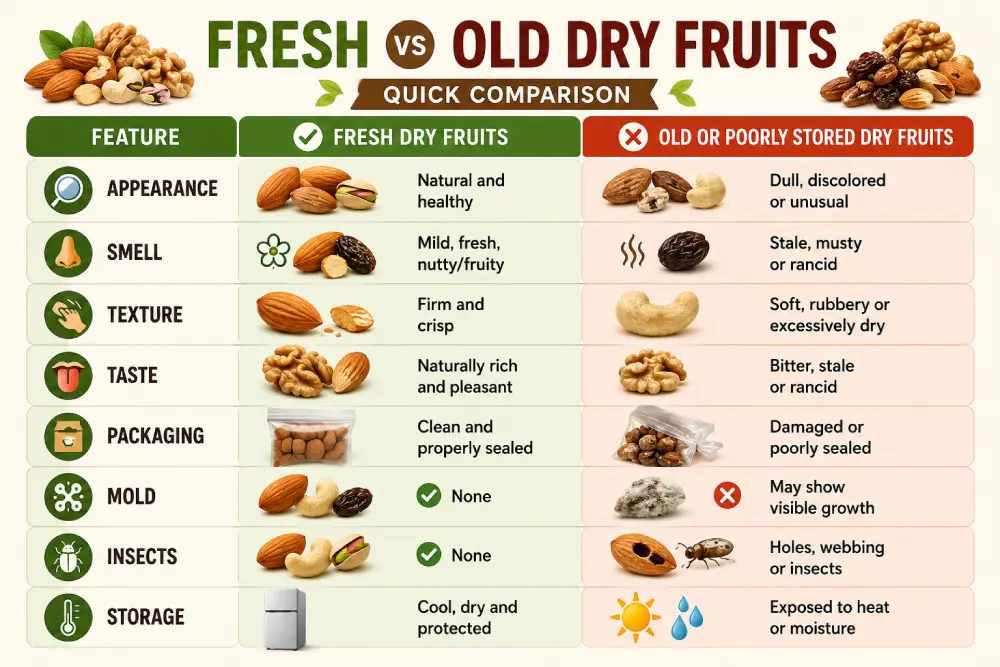
Fresh vs Old Dry Fruits: Quick Comparison
How to Keep Dry Fruits Fresh at Home
Buying fresh dry fruits is only half the job. Proper storage helps maintain their quality for longer.
Store them in airtight containers
After opening a package, transfer dry fruits into a clean, airtight container. This helps reduce exposure to air and moisture.
Keep them away from heat
Avoid storing nuts near ovens, stoves, or areas exposed to direct sunlight. Heat can accelerate the oxidation of natural oils.
Refrigerate when appropriate
For longer storage, refrigeration can help maintain the quality of many nuts and dried fruits. This is especially useful for products that contain higher amounts of natural oils, such as walnuts.
Always make sure the product is properly sealed before placing it in the refrigerator to prevent moisture and unwanted odors from affecting it.
Buy according to your consumption
Instead of buying a very large quantity that may sit unused for months, consider purchasing an amount you can comfortably consume while it’s at its best.
Can Old Dry Fruits Still Be Eaten?
It depends on their condition.
Dry fruits that are simply past their peak freshness may have lost some flavor or crunch, but nuts that smell rancid, show mold, have insect infestation, or have other obvious signs of spoilage should not be consumed.
When in doubt, it’s safer to discard the product rather than take a chance.
Buy Fresh, Quality Dry Fruits
Choosing fresh dry fruits doesn’t have to be difficult. A quick check of the appearance, aroma, texture, taste, packaging, and storage conditions can help you identify better-quality products.
At Hashim Mart, our goal is to make quality dry fruits and nuts easily accessible to customers who care about freshness and taste. From almonds and walnuts to cashews, pistachios, raisins, and other healthy snacks, choosing quality products is the first step toward enjoying dry fruits at their best.
Final Thoughts
Knowing the signs of fresh vs old dry fruits can help you shop smarter and avoid products that have lost their quality. Fresh dry fruits should generally have a natural appearance, pleasant aroma, firm texture, and clean taste.
The next time you buy dry fruits, don’t just look at the price. Take a moment to check their freshness, packaging, and storage conditions. A little attention can make a big difference in the quality of your snack.
Freshness matters—and when it comes to dry fruits, you deserve every bite to be delicious, wholesome, and satisfying.