
















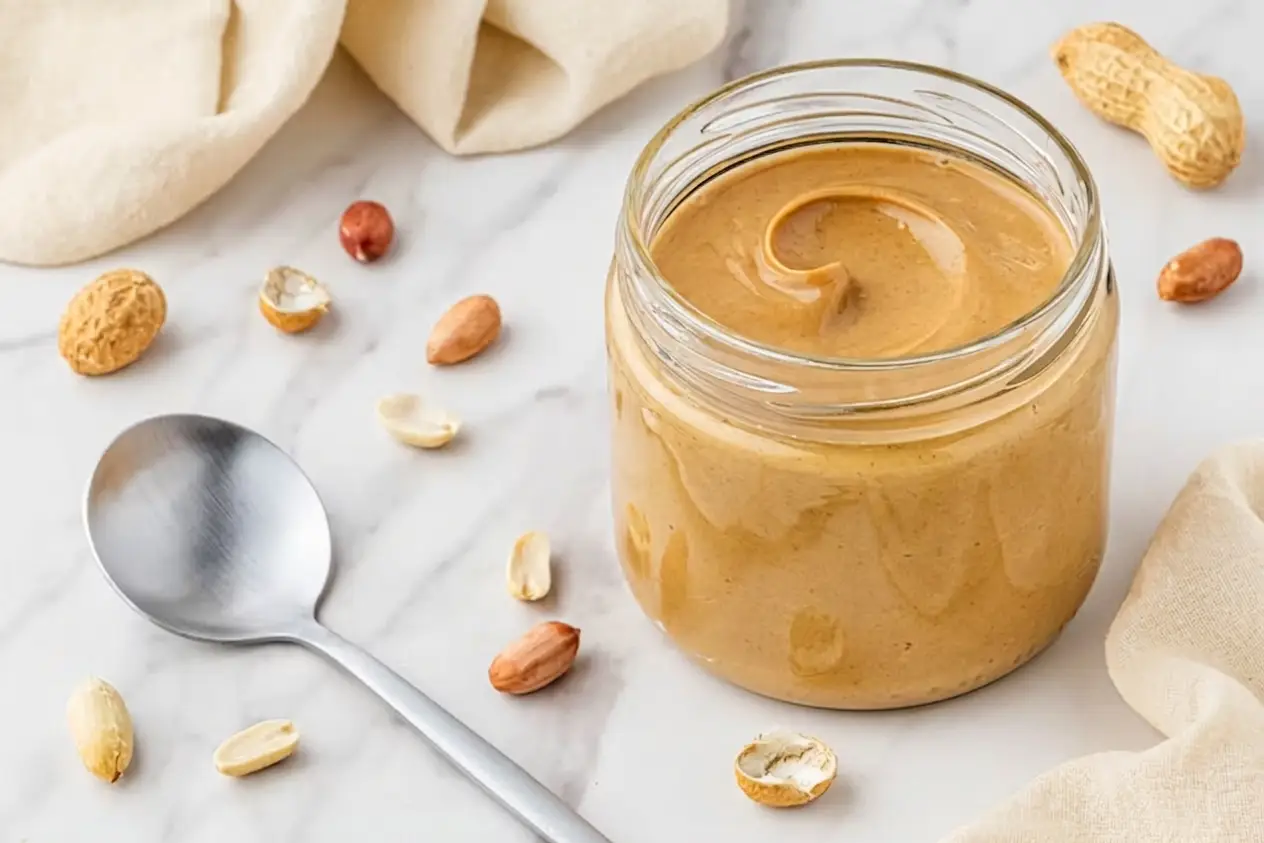
Homemade Peanut Butter Recipe
Easy, Healthy & Delicious!
If you love peanut butter but want to avoid unnecessary additives, making your own at home is surprisingly easy. All you need are roasted peanuts, a little patience, and a blender or food processor.
Homemade peanut butter is creamy, naturally delicious, and lets you control exactly what goes into it. You can keep it completely natural or add a touch of salt, honey, cinnamon, or even a little cocoa for extra flavor.
Homemade Peanut Butter Recipe
Ingredients
- 2 cups roasted, unsalted peanuts
- ¼ teaspoon salt, optional
- 1 teaspoon honey, optional
- 1 teaspoon peanut or coconut oil, optional if you prefer a smoother texture
Method
1. Roast the peanuts
If your peanuts aren’t already roasted, spread them on a baking tray and roast at around 175°C for 8–12 minutes. Let them cool slightly.
2. Add them to a food processor
Place the roasted peanuts in a food processor or high-powered blender. Start blending.
At first, the peanuts will turn into a coarse powder. Keep processing and you’ll notice the natural oils being released.
3. Keep blending
Continue blending for several minutes, stopping occasionally to scrape down the sides. The mixture will gradually become smooth and creamy.
Don’t worry if it seems dry at first—peanuts naturally release oil as they’re blended.
4. Add your extras
Add salt if desired. For a slightly sweeter peanut butter, mix in a small amount of honey. You can also add cinnamon or cocoa powder for a different flavor.
5. Store it
Transfer your homemade peanut butter to a clean, airtight jar. Store it in the refrigerator and use a clean, dry spoon whenever you serve it.
Why Is Peanut Butter Good for You?
Peanut butter isn’t just delicious—it can also be a nutritious addition to your diet when eaten in sensible portions.
1. Good Source of Protein
Peanut butter contains plant-based protein, making it a convenient option for breakfast and snacks. Pairing it with whole-grain bread, oats, fruit, or yogurt can make a more satisfying meal.
2. Provides Healthy Fats
Peanuts are rich in mostly unsaturated fats. These fats can be part of a balanced diet and are one reason peanut butter can help you feel satisfied after eating.
3. Contains Important Nutrients
Peanut butter provides several nutrients, including vitamin E, magnesium, niacin, and other B vitamins. It also contains antioxidants and plant compounds.
4. Can Help Keep You Full
Because peanut butter contains protein, fat, and some fiber, a small serving can be quite filling. This makes it useful as part of a balanced snack.
5. Great for Active Lifestyles
For people who exercise regularly, peanut butter can be an easy way to add protein and energy to meals. Try it with a banana before a workout or spread it on whole-grain toast after exercise.
When Should You Eat Peanut Butter?
There isn’t one perfect time to eat peanut butter. It depends on your lifestyle, appetite, and overall diet.
At Breakfast
Spread it on whole-grain toast and add banana slices or berries. You can also stir it into oatmeal or blend it into a smoothie.
Before a Workout
A small serving with a banana or whole-grain toast can provide energy before exercise. However, avoid eating a large amount immediately before intense exercise because the fat content may feel heavy for some people.
After a Workout
Peanut butter can be part of a post-workout meal or snack, especially when combined with another protein source and a carbohydrate such as banana, oats, or whole-grain bread.
As an Evening Snack
Feeling hungry between dinner and bedtime? A small amount of peanut butter with apple slices or whole-grain crackers can be a satisfying option.
When Should You Avoid Peanut Butter?
Although peanut butter can be healthy for many people, it isn’t suitable for everyone.
Avoid peanut butter if you have a peanut allergy. Peanut allergies can cause serious and potentially life-threatening reactions.
You should also be mindful of peanut butter products containing large amounts of added sugar, salt, hydrogenated oils, or other unnecessary ingredients. Check the label if you’re buying commercial peanut butter.
If you’re managing your calorie intake, remember that peanut butter is energy-dense. Even though it contains nutritious fats, eating large quantities can quickly increase your overall calorie intake.
People following specific diets for medical or dietary reasons should also consider their individual nutritional requirements.
How Much Peanut Butter Should You Eat?
For most people, around 1–2 tablespoons can be a reasonable serving, depending on their overall calorie and nutritional needs.
The key is moderation. Peanut butter is nutritious, but more isn’t necessarily better.
Final Thoughts
Making homemade peanut butter is one of the easiest ways to enjoy this classic spread without unnecessary ingredients. With just roasted peanuts and a food processor, you can create a creamy, flavorful spread that’s perfect for breakfast, snacks, smoothies, and workout meals.
For the best nutritional choice, keep your recipe simple and avoid excessive added sugar or salt. And remember—peanut butter can be part of a healthy diet, but portion size matters.